|
Decision on the death penalty would be historic
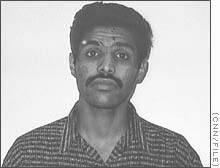
By Phil Hirschkorn NEW YORK (CNN) -- If the jury that convicted Mohamed Al-'Owhali in the bombing of the U.S. Embassy in Kenya sentences him to death, he will become the first federal defendant slated for U.S. execution for crimes committed off American soil. "In all probability, your decision will be in the headlines of every newspaper in the world," Al-'Owhali defense attorney David Baugh told the jury during his closing argument. Many readers will be in countries where the death penalty is outlawed. If sentenced to death, Al-'Owhali would become only the third foreign national on federal death row. He would join two Colombian men convicted in the 1998 killing of a Kansas City drug dealer. The United States has executed foreign nationals for federal crimes on only one previous occasion -- during World War II. But since the U.S. Supreme Court reinstated capital punishment 25 years ago, 15 foreign nationals have been among the 716 state executions, according to the Death Penalty Information Center. The list starts with Carlos Santana, of the Dominican Republic, in Texas in 1993, and ends with Sebastian Bridges, of South Africa, in Nevada, this April. Arizona, California, Florida, Georgia, Oklahoma and Virginia are the other states to execute foreign nationals, by lethal injection in all but one case. Santana was convicted of killing a Houston armored truck guard during a botched 1981 robbery attempt. Among his three witnesses to his lethal injection was his lawyer, Ramsey Clark, the former U.S. attorney general who testified on al-'Owhali's behalf during his death penalty phase. Two days after Santana died, Texas executed Carlos Montoya for killing a Dallas policeman in 1983. Montoya was the first Mexican executed in the United States in a half-century. Now, half the 95 inmates on state death rows are Mexican citizens. The Justice Department announced its intent to seek the death penalty against al-'Owhali and Tanzania embassy bomber Khalfan Khamis Mohamed in June 2000. Defendant attorneys challenged the move, arguing the death penalty is cruel and unusual punishment that violates the U.S. Constitution's Eighth Amendment and that international law bars the United States from imposing it. U.S. District Judge Leonard Sand rejected these arguments, writing in a January ruling that the U.S. Supreme Court deemed capital punishment legal in Gregg v. Georgia (1976) and the United States is not a signatory to any treaty banning executions. Sand also rejected defense contentions that the U.S. death penalty is arbitrarily imposed or biased with respect to race and geography. He relied on a recent Justice Department review that found black and Hispanic defendants charged with crimes that carry the death penalty are actually less likely to be subjected to execution than whites. On the other hand, blacks and Hispanics constitute three-quarters of the death penalty prosecutions approved by the attorney general since 1988, and Sand wondered about this. "Are minorities being charged by U.S. attorneys with capital-eligible offenses at greater rates than whites who commit similarly culpable conduct? The DOJ survey does not address this issue," Sand wrote. Of the 24 federal death row inmates, 17 are black, three are Hispanic, three are white, and one is Asian. Some countries object to U.S. policy Oklahoma City bomber Timothy McVeigh will be the first federal execution since 1963. It will be followed by one week with the execution of Juan Raul Garza, a Texas-based marijuana trafficker sentenced for the murder of three other traffickers.
Like, McVeigh, al-'Owhali and Mohamed were charged under homicide-related statutes in Congress' 1994 crime bill that expanded the death penalty option to 60 offenses such as the terrorist murder of a U.S. national in another country. The death penalty law did not exist when the first terrorist act on American soil occurred -- the 1993 World Trade Center bombing. The men convicted in that attack are serving life sentences. "This is a time when the world is increasingly moving toward abolition of the death penalty. The only country at this point that is expanding the application of the death penalty, among western industrialized nations, is the United States," says Sandra Babcock, a Minneapolis-based attorney specializing in international law and the death penalty. Babcock, who represented Mohamed Odeh in the embassy bombings trial, says the death penalty creates disparities in sentencing. For example, the government will not seek the death penalty against Mamdouh Mahmud Salim, who prosecutors describe as a founding and leading member of al Qaeda, the militant Islamic group run by Osama bin Laden allegedly behind the conspiracy to kill Americans. Nor will the government pursue the death penalty against three London cell operatives fighting extradition from England. "Countries will not extradite suspects to face trials in the United Sates unless the U.S. grants assurances that it will not seek the death penalty," Babcock says. That is exactly what happened with Salim after his arrest in Germany. Should investigators track down fugitives Fazul Abdullah Mohammed and Mustafa Fadhil, men described as the ground leaders of the bombing crews, there is a fair chance the United States would have to drop the death penalty against them -- although they are accused of identical crimes as al-'Owhali and K.K. Mohamed -- depending where they are caught. "To me that is an arbitrary distinction because it's not based on culpability it's based on happenstance," Babcock says. More than half the world's nations have abolished the death penalty in law or by practice. World War II saboteurs executed The only other time foreign nationals were subjected to federal execution in the United States was August 8, 1942, when six Nazi spies were electrocuted for a plot to sabotage American infrastructure. The foiled plot sought to bomb New York bridges and the city's water supply system, block canals along the Mississippi and Ohio Rivers, disable inland railroad stations in New Jersey and Pennsylvania, destroy aluminum factories in Tennessee and Missouri, and place bombs in department stores to create additional panic, just six months after Pearl Harbor. The mission unraveled after two of the eight conspirators tipped off the FBI. In a secret trial inside the Department of Justice building before a military commission appointed by President Franklin Roosevelt, the six defendants were sentenced to death. Five of the condemned men were German nationals and the sixth was a German-born naturalized U.S. citizen. Of the 34 federal prisoners executed since 1927, these are the only ones who were not Americans, according to the Death Penalty Information Center. Al-'Owhali, Mohamed and the two Colombians who committed murder in Missouri could be next in line. CNN producer Phil Hirschkorn has been following the embassy bombings case since 1998. Throughout the trial, he will be filing regular reports from the U.S. District Court in Manhattan for CNN.com Law Center. Send your comments to him at law.center@cnn.com.
|
||||||||||